

⸻
TOKIMUSUBI メソッドのエビデンス
なぜ、この体験は心とパフォーマンスに
効くのか
現代の社会では、多くの人が、高負荷な意思決定、感情のゆらぎ、絶え間ない情報の波にさらされています。
TOKIMUSUBIは、禅、茶の湯、巡礼、工芸、能楽や尺八・声明の響きなど、日本の精神文化を土台に、「心を静かに整え直す時間」をデザインするブランドです。
ここでは、その体験が感性だけでなく、科学的なエビデンスのうえでも有効である理由をわかりやすくご紹介します。
⸻
Overview
なぜ、日本の精神文化は
「心」と「パフォーマンス」に効くのか
世界中の研究により、禅的な瞑想やマインドフルネス、
森林浴、茶や花・工芸などの芸術的な所作、音と静けさを味わう体験が、
• 注意力・自己認識の向上
• 血圧・心拍・ストレスホルモン(コルチゾール)の低下
• チームの一体感やつながり感の向上につながる可能性
が示されています。
TOKIMUSUBIのプログラムは、これらのエビデンスに基づく要素を日本の精神文化の文脈の中で統合し、現代のリーダーやビジネスパーソン、そして心の軸を整えたいと願うあらゆる人々に届けることを目的としています。
⸻
Evidence
禅・呼吸とマインドフルネス
1. 禅的な呼吸と坐禅
– 注意力と感情を整える
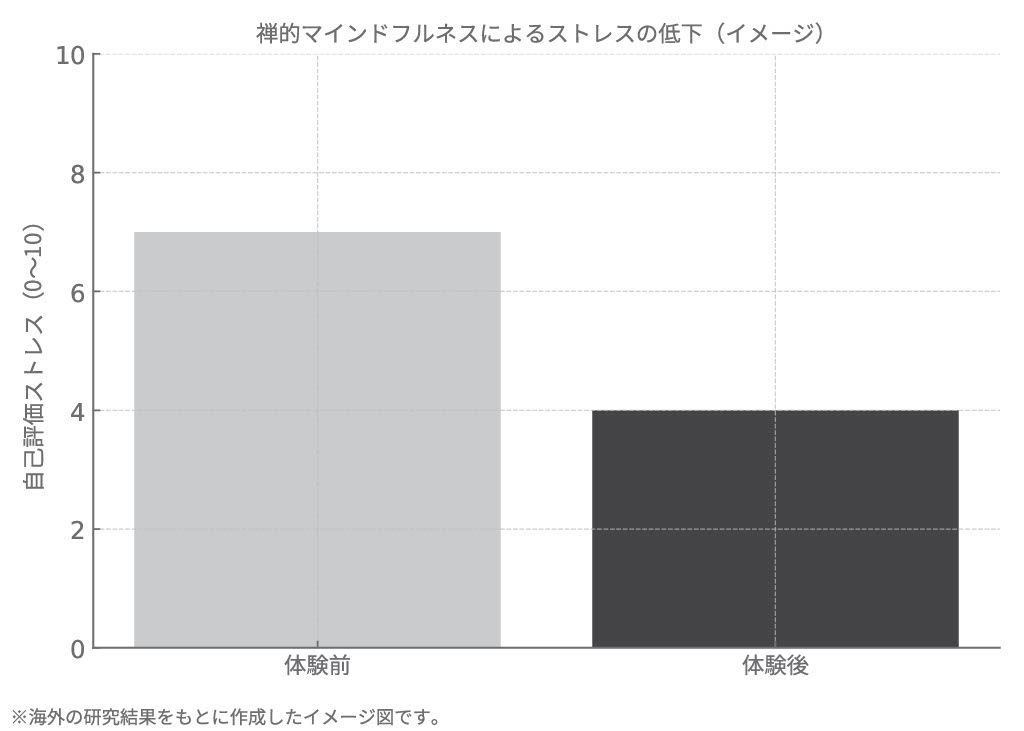
海外のマインドフルネス研修(6〜8週間)に関する複数の研究・臨床試験では、
• メンタルヘルスやウェルビーイングの改善
• 注意力・感情の自己調整の向上
といった結果が報告されています。
TOKIMUSUBIの「Zen by Candlelight」や「Experience True Zen at a Head Temple」では、
• 姿勢と呼吸を丁寧に整えるガイド
• 光と音を最小限に抑えた空間設計
によって、こうしたマインドフルネスの効果を日本の禅文化の中で体感いただけるようにデザインしています。
⸻
Evidence
森・巡礼と自律神経
2. 森と巡礼
– 自律神経と血圧を整える
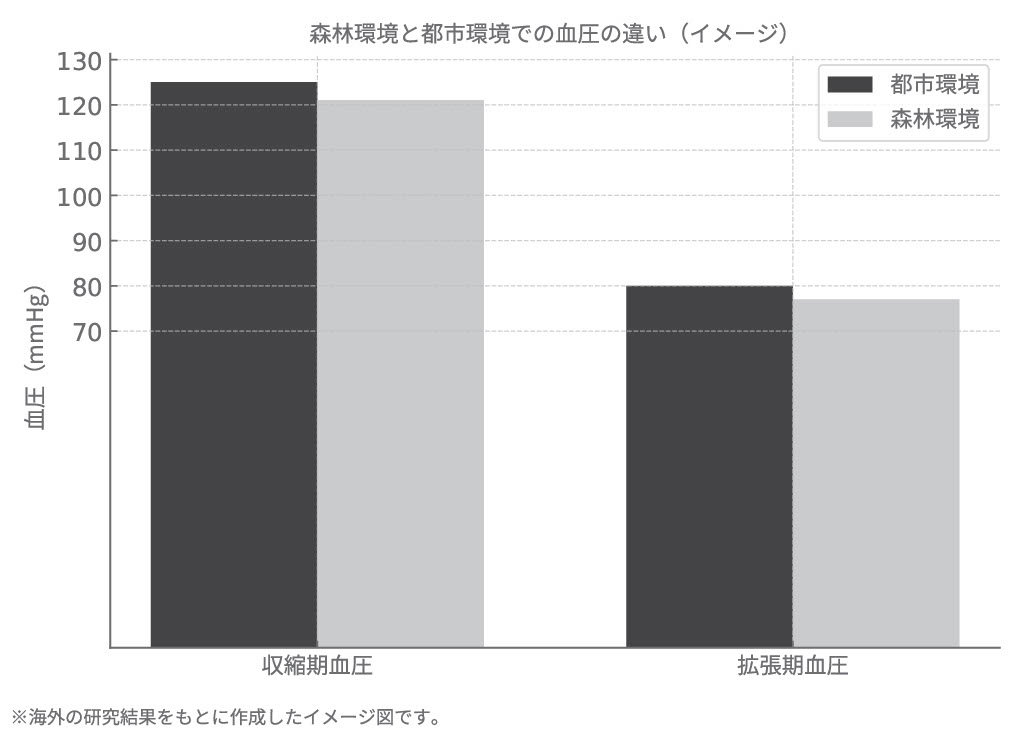
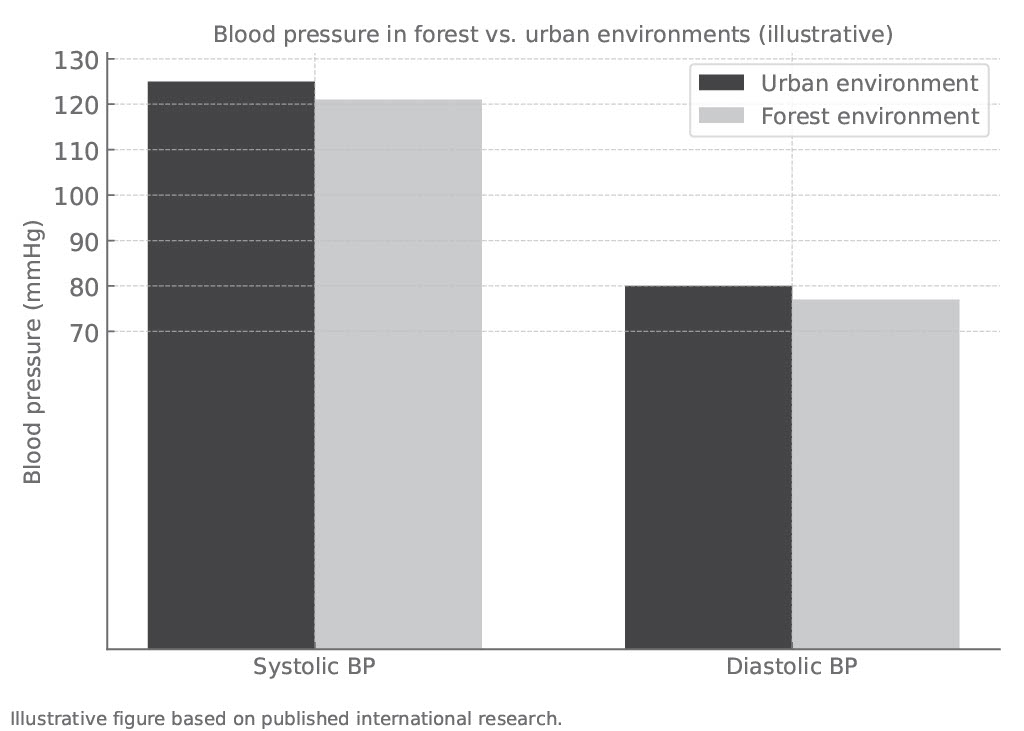
森林浴や自然環境に関するメタ分析・多施設研究では、
• 心拍数やストレスホルモン(コルチゾール)が下がる
• 副交感神経(休息モード)が高まり、自律神経のバランスが整う
といった変化が報告されています。
「Kumano Kodo Rebirth Retreat」では、世界遺産・熊野古道を“観光”ではなく“巡礼”として歩きます。
• 川のせせらぎや苔むした石畳の感触
• 土地に息づく物語や歴史
を通して、自然がもたらす身体への効果と、心の「立て直し」が同時に起こる場をつくっています。
⸻
Evidence
茶・工芸・所作の芸術
3. 茶と工芸、所作の芸術
– 所作のマインドフルネス
茶道やいけばな、工芸などの「ゆっくりとした所作」に集中する活動は、
• 自覚的なストレスや不安の軽減
• 呼吸の安定
などに関連する可能性が、パイロット研究から示されています。
TOKIMUSUBIでは、茶人・料理人・職人とともに過ごす時間を、
• 自分のペースと感性を取り戻す「所作の瞑想」
としてデザインしています。
一つ一つの動きに意識を向けることで、忙しい日常から離れ、自分の中心に静かに戻っていく感覚を育みます。
⸻
Evidence
音・静けさとつながり
4. 静けさと響き
– 思考モードを切り替える「静かな一体感」
近年の心理学・神経科学の研究では、静かな音環境や一定のリズムをもった音に意識的に耳を傾ける時間が、
• 心拍変動(HRV)の改善など、ストレス耐性と関連する指標を高める
• 不安や緊張をやわらげ、「今ここ」に注意を戻しやすくする
といった効果につながる可能性が指摘されています。
TOKIMUSUBIのセッションでは、参加者ご自身が演奏したり、大きな声を出したりする必要はありません。
• 尺八や鐘の音が少しずつ小さくなり、静けさに溶けていくプロセス
• キャンドルの揺らぎと、それを包む「音の少なさ」
こうした「響き」と「静けさ」のコントラストに意識を向けてもらうことで、
• 一段ギアを落とした「俯瞰・内省モード」へと
静かに切り替わっていくことを意図しています。
これはスピリチュアルな高揚感を求めるものではなく、リーダーが冷静さと集中力を取り戻し、自分の内側とチームの空気をフラットに見直せる状態をつくるための時間です。
⸻
TOKIMUSUBI独自のエビデンスづくり
TOKIMUSUBI独自のデータを育てていく
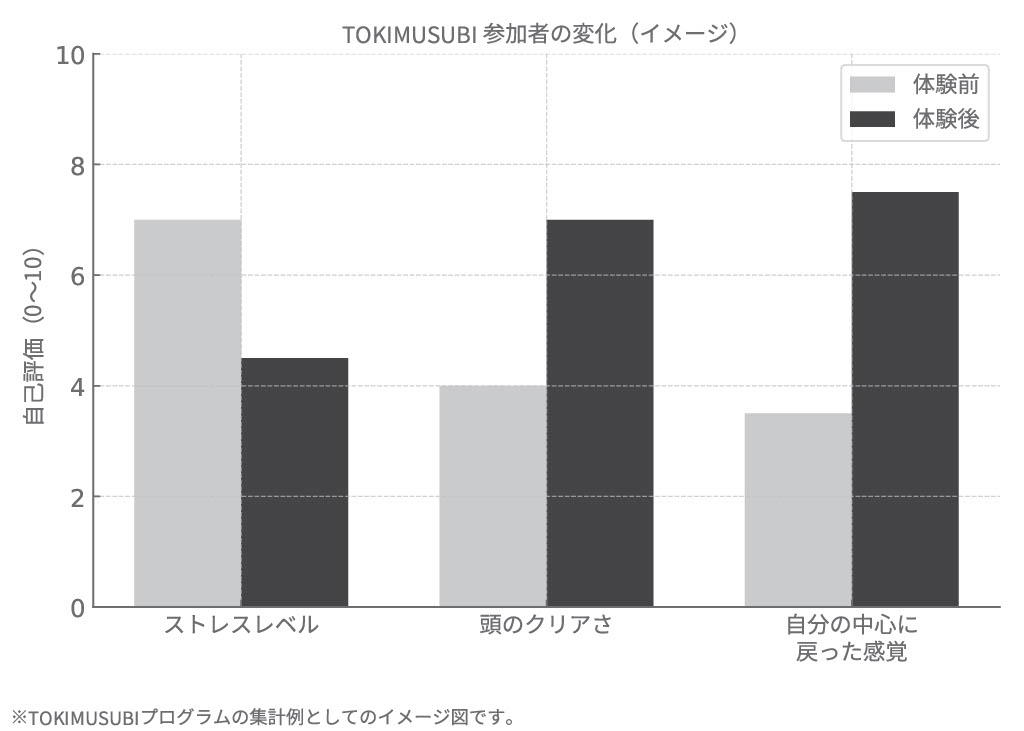
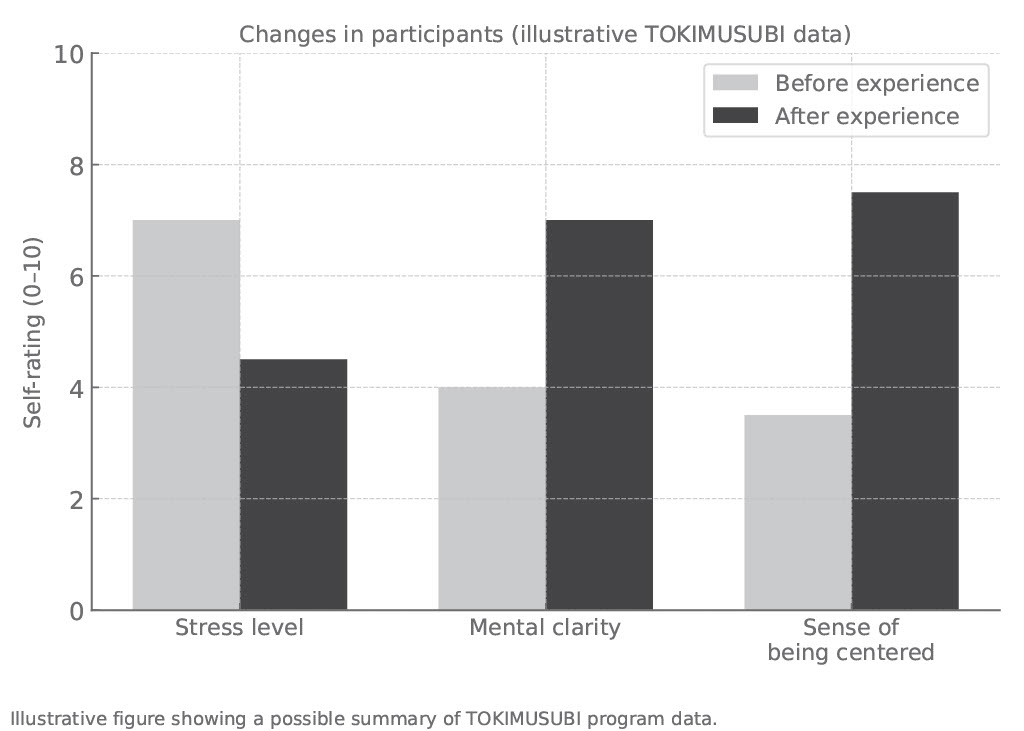
TOKIMUSUBIは、世界の研究に依拠するだけでなく、自らのプログラムの効果を、参加者の声やデータを通じて丁寧に可視化していくことを目指しています。
今後、プログラムでは例えば次のような指標を匿名かつ統計的に集計していきます。
• ストレスレベル
• 頭のクリアさ
• 自分の中心に戻った感覚
• 数週間〜数ヶ月後のフォローアップ(希望者のみ)
• 睡眠の質
• 感情の波の扱いやすさ
• 集中力や意思決定の質の変化
これらを蓄積することで、「日本の精神文化にもとづく体験が、現代のリーダーや組織、そして心の軸を整えたいと願う人々に、どのような変化をもたらすか」を、TOKIMUSUBI独自のエビデンスとして発信していきます。
⸻
思想へのブリッジ
科学と、千年続く日本の知恵を結ぶ
現代の科学は、「なぜ効くのか」を説明することを助けてくれます。
一方で、日本では千年以上前から、禅や茶の湯、巡礼や芸能、工芸を通じて、人が心を整え、自然と調和するための知恵が受け継がれてきました。
TOKIMUSUBIは、こうした日本の精神文化の核心を、最新のウェルビーイングやリーダーシップ研究の知見と結びつけながら、現代のリーダーやビジネスパーソン、そして、心の軸を静かに整えたいと願うあらゆる人々に届けていくことを目指しています。
⸻
Contact
エグゼクティブ研修・リトリートのご相談
TOKIMUSUBIのメソッドとエビデンスを活かしたプログラムを、リーダー育成やウェルビーイング施策としてご検討中の方は、どうぞお気軽にお問い合わせください。
エグゼクティブ/マネジメント層向けのカスタマイズや、チーム単位でのリトリート設計も承っております。
⸻
Why these experiences support the heart and performance
⸻
Evidence Behind the TOKIMUSUBI Method
Why these experiences support the heart and performance
In today’s world, many people live under constant pressure:
high-stakes decisions, emotional ups and downs, and an endless flow of information.
Grounded in Zen, tea ceremony, pilgrimage, traditional crafts,
and traditional music and chanting such as shakuhachi and nō,
TOKIMUSUBI designs experiences that quietly help you “re-align the heart.”
This page explains why these experiences are not only inspiring,
but also supported by modern scientific evidence.
⸻
Overview
Why Japan’s spiritual culture supports mind and performance
A growing body of research shows that practices such as
Zen-style meditation and mindfulness, forest bathing,
contemplative arts like tea or flower arrangement,
and shared experiences of listening to sound and silence can:
• Reduce stress and anxiety
• Enhance attention and self-awareness
• Lower blood pressure, heart rate, and cortisol
• Strengthen a sense of connection and team cohesion
TOKIMUSUBI’s programs integrate these evidence-based elements
within the cultural context of Japan, and are designed for
modern leaders and business professionals,
as well as anyone who wishes to quietly realign their inner compass.
⸻
Evidence
Zen, breathing, and mindfulness
1. Zen-style breathing and meditation: aligning attention and emotion
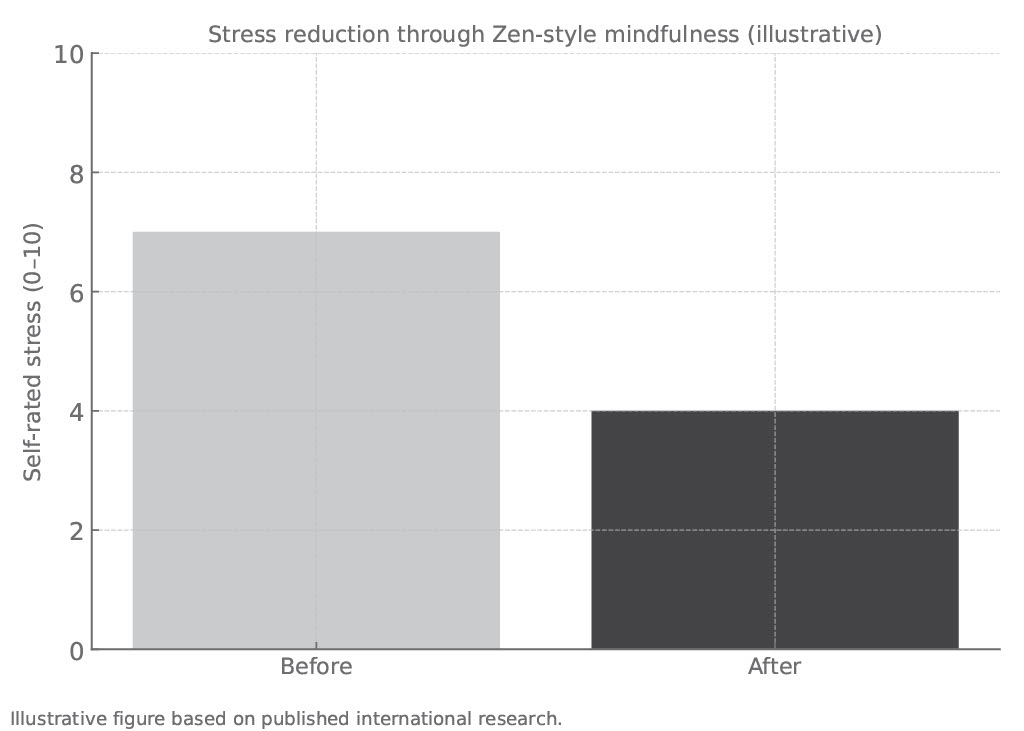
Across multiple studies and clinical trials of 6–8 week mindfulness programs,
participants have shown:
• Significant reductions in stress and anxiety
• Improved mental health and well-being
• Better attentional control and emotional regulation
At TOKIMUSUBI, programs such as “Zen by Candlelight” and
“Experience True Zen at a Head Temple” create:
• Quiet temple spaces
• Gentle guidance on posture and breathing
• Minimal, carefully curated light and sound
so that participants can experience these mindfulness effects
through an authentically Japanese Zen setting.
⸻
Evidence
Forests, pilgrimage, and the autonomic nervous system
2. Forests and pilgrimage: regulating the nervous system and blood pressure
Meta-analyses and large multi-site studies on forests and nature report that:
• Blood pressure (both systolic and diastolic) decreases by several mmHg after time in forests
• Heart rate and stress hormones such as cortisol are reduced
• Parasympathetic (“rest-and-digest”) activity increases,
helping to rebalance the autonomic nervous system
In our “Kumano Kodo Rebirth Retreat,”
participants walk the UNESCO-listed Kumano Kodo not as sightseeing,
but as pilgrimage.
• The quiet of deep forests
• The sound of rivers and the feel of moss-covered stones
• Stories and history rooted in the land
create a setting where the physiological benefits of nature
are woven together with a sense of renewal and inner reset.
⸻
Evidence
Tea, crafts, and mindful gestures
3. Tea, crafts, and the art of mindful gestures
Pilot studies on contemplative arts such as tea ceremony or ikebana
suggest associations with:
• Higher mindfulness scores
• Reduced perceived stress and anxiety
• Calmer, more stable breathing
At TOKIMUSUBI, sessions with tea masters, chefs, and artisans are designed
not as performances to be evaluated, but as meditations through movement and gesture.
By slowing down and attending carefully to each action,
participants can step out of their everyday business context
and quietly return to their own pace and inner center.
⸻
Evidence
Sound, silence, and connection(final version)
4. Silence and resonance: a quiet shift of mental gear
Recent work in psychology and neuroscience suggests that
spending time in a low-stimulation sound environment
and intentionally listening to simple, steady sounds can:
• Help rebalance the autonomic nervous system
(from “fight-or-flight” toward “rest-and-digest”)
• Improve heart rate variability (HRV), a marker related to stress resilience
• Reduce anxiety and tension, and make it easier to return attention to “here and now”
In TOKIMUSUBI sessions, participants are not asked to sing or play instruments.
Instead, they share:
• The way chanting slowly fills and then leaves the space
• The tail end of a shakuhachi tone or temple bell fading into silence
• The gentle flicker of candlelight within an almost soundless room
By paying attention to this contrast between resonance and quiet,
leaders can shift:
• from a “meeting mode,” where the mind is constantly processing and reacting,
• into a more reflective, observing mode,
where they can see themselves and their teams with greater clarity.
This is not about seeking mystical experiences.
It is a practical way to create a mental space
where leaders can cool down, regain composure,
and reconnect with what truly matters before returning to high-stakes decisions.
⸻
Building TOKIMUSUBI’s own data over time
Beyond drawing on global research,
TOKIMUSUBI is committed to visualizing the impact of its programs
through participants’ voices and data.
Over time, we plan to anonymously and statistically track indicators such as:
• Pre/post self-ratings (0–10) on
• Stress level
• Mental clarity
• Sense of being “back at one’s center”
• Optional follow-up surveys weeks or months later on
• Sleep quality
• Emotional regulation
• Changes in focus and decision-making
By accumulating this information,
we aim to share TOKIMUSUBI’s own evidence of how experiences rooted in Japan’s spiritual culture
support modern leaders, organizations,
and all those who wish to realign their inner compass.
⸻
Bridging science and Japan’s timeless wisdom
Modern science helps us explain why these experiences work.
At the same time, for more than a thousand years in Japan,
practices such as Zen, tea ceremony, pilgrimage, performing arts, and crafts
have been passed down as ways to calm the heart
and live in harmony with nature.
TOKIMUSUBI stands at this bridge:
• connecting the core of Japan’s spiritual culture
• with contemporary insights on well-being and leadership
and bringing them into the real lives of modern leaders,
business professionals, and anyone seeking a quieter, truer way to live and work.
⸻
Contact
Leadership programs and retreats
If you are considering TOKIMUSUBI’s evidence-based experiences
for your leadership development or well-being initiatives,
we would be delighted to discuss how we can support you.
We also design customized programs
for executive teams and management groups.