

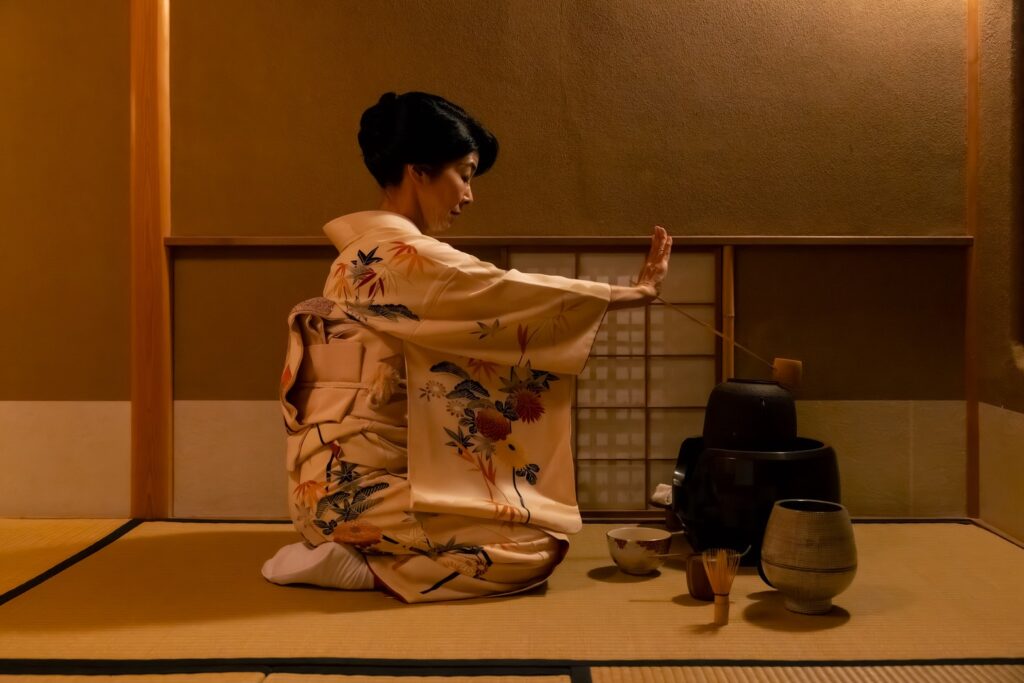
茶人・裏千家准教授/「和知ノ庵」主宰/「和知ノ会」代表/日本抹茶協会エグゼクティブアドバイザー

東京生まれ。幼少期より茶道に親しみ、裏千家にて研鑽を重ねてきた。

大学卒業後は総合商社の人事部にて、主に採用・研修業務を担当。
その後、ブラジル・サンパウロ滞在中には、現地ブラジル裏千家の稽古場に通い、日系人やブラジル人に向けたボランティア指導を行うなど、海外における茶道普及にも携わる。

帰国後は茶道教室「和知ノ会」を立ち上げ、新宿御苑前の茶室「和知ノ庵(わちのあん)」を拠点に活動を展開。
稽古や茶会に加え、初心者や訪日ゲストに向けた茶の湯体験プログラムを企画し、開催している。

現在は、日本抹茶協会エグゼクティブアドバイザーとして抹茶文化の魅力を発信しながら、企業や学校における礼法・所作のレッスン、国内外のゲストを対象とした茶の湯プログラムなど、多様な場を通じて、茶の湯が育んできた美意識と精神性を紹介している。

「一度身に付いた美しい所作は永遠──所作が変われば心も変わる」という信条を胸に、出会いのひとときを一期一会の時間として大切にしながら、穏やかに学び合える稽古の場を育んでいる。
Sōkei Kaneko
Tea practitioner / Urasenke Associate Professor / Host of “Wachinoan” / Head of “Wachinokai” / Executive Advisor, Japan Matcha Association
Born in Tokyo, Sōkei Kaneko has been familiar with the Japanese way of tea since childhood and has continued to deepen her training in the Urasenke tradition.
After graduating from university, she worked in the HR department of a general trading company, focusing mainly on recruitment and training.
During a subsequent stay in São Paulo, Brazil, she practiced at the local Brazil Urasenke training hall and volunteered to teach tea to both Japanese Brazilians and Brazilian students, contributing to the spread of the way of tea overseas.
Upon returning to Japan, she founded the tea school Wachinokai and established her base at the tearoom Wachinoan near Shinjuku Gyoen, where she hosts regular lessons and tea gatherings, as well as introductory tea ceremony experiences for beginners and international visitors.
As Executive Advisor to the Japan Matcha Association, she shares the appeal of matcha culture while offering etiquette and movement lessons for companies and schools, together with tea programs designed for guests from Japan and abroad. Through these diverse settings, she introduces the aesthetic sensibilities and spiritual depth cultivated by the way of tea.
Guided by the belief that “once beautiful manners and movements are truly acquired, they stay with you for life — and as your outward conduct changes, your heart begins to change as well,” she cherishes each encounter as a unique, once-in-a-lifetime moment and creates spaces where people can gently explore how refined movements and gestures can touch the heart.
茶道との出会い
私が茶道に触れたのは、特別なきっかけがあったからではありません。家で祖母が茶道を教えていて、気がついたら4歳くらいから、自然と手伝いをしていました。自分では「始めた」という感覚はなかったですね。続ける、というより、生活の中にずっとあった、という感覚です。
所作が残る、ということ
会社で働いていた頃、物を両手で丁寧に扱う所作などから「茶道をされているでしょう」と言われることがありました。
自分では意識していなかったのですが、長年続けてきたことは、所作として身体に残っているのだと思います。
私が代表をしている「和知ノ会」のコンセプトを
「一度身についた美しい所作は永遠。所作が変われば、心も変わる」
としています。
性格はいつでも変えられると言いますが、所作は簡単には消えません。美しい所作を身につけて欲しいなと思っています。
そして、茶道の「美意識」には今もなお感動します。
自分の知らないこともまだまだありますし、ずっと続けていくのだと思います。
茶道を教えるということ
東京・麻布十番で本格的に教室として「和知ノ会」を始めたのは、10年ほど前です。
正直、人に教えることには迷いがありました。茶道は、簡単に教えられるものではありませんし、教える側の覚悟も必要だと思っていました。
ただ、海外で指導をする経験などを経て、その後、「通いたい」と言ってくださる方が自然と集まり、教室を始めることとなりました。茶道では、入門から師範になるまでには最低でも10年から15年はかかります。
私は今の年齢で取得できる最高位の准教授の資格を持っていますが、
さらに上の教授の資格は、60歳にならないと取得できません。60歳でも、茶の世界では「まだこれから」と言われます。
相手への思いやり、哲学など、時間と経験の積み重ねが重視される世界です。
茶道では「死んでも修行」と言われます。
師匠が亡くなったのちに、お弟子さんが「師匠はこのようにやっていた」と伝えることもあります。
亡くなったあとも、その教えは残るのです。常に責任をもって取り組まなくてはなりません。
一期一会と和敬清寂
「一期一会」と「和敬清寂」はお茶のあらゆることを物語っていると考えています。
一期一会とは、人が生まれてから亡くなるまでの一生の中での、たった一度の出会いという意味です。昔は、今日会えた人と次にいつ会えるかわからなかった。だからこそ、その一回にすべてを込めていたのだと思います。
和敬清寂は、その一期一会を成立させるための心構えです。
和は、調和。敬は、人だけでなく、道具や花、食べ物すべてへの敬意。清は、心をより清らかに、よりクリアにすること。寂は、その先に生まれる、動じない心です。
このような心構えができることで、最高の一期一会になると思います。
私は常に一期一会を大切にして皆さんをお迎えしています。
本格的な茶室、和知ノ庵
2025年5月に和知ノ庵をオープンしました。
炭も使える本格的な四畳半の茶室を構えました。これは、10年ほど一緒に続けてきてくれた生徒さんたちに、本格的な茶道のすべてを体験してほしいと思ったからです。
一般的にイメージされる「お茶会」は、お菓子を食べて、薄茶を飲んで終わり、というものが多いですが、本来の茶会は違います。
まず懐石料理をいただき、お酒も酌み交わしながら親睦を深め、最後に薄茶を飲んで帰る。全体で4時間ほどかかります。
亭主と客が協力して作り上げる「一座建立」。特に正客は、他の客の気持ちを汲みながら、亭主とのやり取りを担う重要な役割です。
そのような円熟した関係性もお茶の真髄だと思います。
また、和知ノ庵では場所の時間貸し、そして日本文化専門の民泊も行っています。
海外の方に向けた本格的な茶道に触れる機会にもなればと考えています。
これからのこと
本物を追求したい、と考えています。
本物の一期一会と和敬清寂をみなさんと分かち合い
お茶は歴史があり、自分と向き合える、楽しいものなのだ、ということを広めていければと思っています。
茶道というと堅苦しいイメージがあるかもしれませんが、まずは、美味しいお抹茶を一服、という感覚で、体験コースに来ていただいて、そこから何かを感じ取っていただけたら嬉しいですね。
Hearing from Ms. Keiko Kaneko
Associate Professor (Senke tradition) / Executive Advisor, Japan Matcha Association / Host of Wachi-no-an
On what it means to devote oneself to the Way of Tea
Encountering Tea
My first contact with tea ceremony wasn’t triggered by any special event. My grandmother taught tea at home, and before I knew it—around the age of four—I was naturally helping out. I never felt like I “started” tea. Rather than “continuing,” it has always simply been there, woven into my everyday life.
When Gestures Stay with You
When I was working at a company, people would sometimes say, “You must practice tea,” based on the way I handled objects—carefully, with both hands. I wasn’t consciously aware of it, but I think that what you practice for many years remains in your body as gesture and comportment.
The concept behind Wachi-no-kai, which I represent, is:
“Once you acquire beautiful, refined gestures, they remain forever. When your gestures change, your heart changes too.”
People say your personality can change at any time, but gestures don’t disappear easily. I want people to truly embody beautiful comportment. And even now, I continue to be moved by the aesthetic sensibility of tea. There is still so much I do not know, and I believe I will keep walking this path for the rest of my life.
What It Means to Teach Tea
I began Wachi-no-kai in a serious capacity as a tea school in Azabu-Juban, Tokyo, about ten years ago. To be honest, I hesitated about teaching. Tea is not something you can teach lightly, and I believed the teacher must have genuine resolve.
However, through experiences such as instructing overseas, people who wished to learn began gathering naturally—those who said, “I want to study with you”—and that is how the school came to be.
In tea, it takes at least 10 to 15 years from beginning practice to becoming a certified tea master. I hold the qualification of Associate Professor (Jun-kyōju), the highest rank I can obtain at my current age. The next rank, Professor, cannot be obtained until one turns sixty. And even at sixty, in the world of tea, people may still say, “You’re only just beginning.”
This is a world that values the accumulation of time and experience—consideration for others, philosophy, and depth of practice. In tea, there is a saying: “Training continues even after death.”
Sometimes, after a teacher has passed away, a disciple will say, “This is how my teacher did it,” and pass that teaching on. The lessons remain even after one is gone. That is why we must always approach this path with responsibility.
Ichigo Ichie and Wa-Kei-Sei-Jaku
I believe the phrases ichigo ichie and wa-kei-sei-jaku express everything about tea.
Ichigo ichie means “a once-in-a-lifetime encounter”—a meeting that happens only once within the span of one’s life. In the past, you never knew when you might see someone again. That is why people poured everything into that single moment.
Wa-kei-sei-jaku is the mindset that allows ichigo ichie to be fulfilled.
Wa is harmony.
Kei is respect—not only for people, but also for utensils, flowers, and food, for everything.
Sei is making the heart purer and clearer.
Jaku is the unshakable calm that arises beyond that.
With this mindset, a truly exceptional ichigo ichie becomes possible. I always welcome everyone with that spirit.
A True Tea Room: Wachi-no-an
In May 2025, I opened Wachi-no-an. We built an authentic four-and-a-half-mat tea room where charcoal can be used—something truly traditional. I did this because I wanted the students who have continued with me for about ten years to experience the full depth of genuine tea practice.
Many people imagine a “tea gathering” as simply eating sweets, drinking a bowl of thin tea, and leaving. But that is not what a true chaji (formal tea gathering) is. In its original form, you begin with kaiseki cuisine, deepen fellowship while sharing sake, and only then drink thin tea before departing. Altogether, it takes about four hours.
There is also the idea of ichiza konryū—“creating the gathering together as one seat,” with host and guests cooperating to bring the moment to life. The shōkyaku (principal guest), in particular, plays a vital role: sensing the feelings of the other guests and carrying the dialogue with the host. I believe that kind of mature relationship, too, is the essence of tea.
At Wachi-no-an, we also offer hourly rental of the space, as well as a Japan-culture-focused lodging (minpaku). I hope it can become a meaningful opportunity for people from overseas to encounter authentic tea.
Looking Ahead
I want to pursue what is genuine.
I hope to share with everyone the true spirit of ichigo ichie and wa-kei-sei-jaku—and to spread the message that tea has history, that it is enjoyable, and that it allows you to face yourself.
Tea ceremony may seem formal or intimidating, but I would be happy if people first came with the simple feeling of, “Let me enjoy one delicious bowl of matcha.” And if, from that first step, they sense something—anything—I would be glad.