

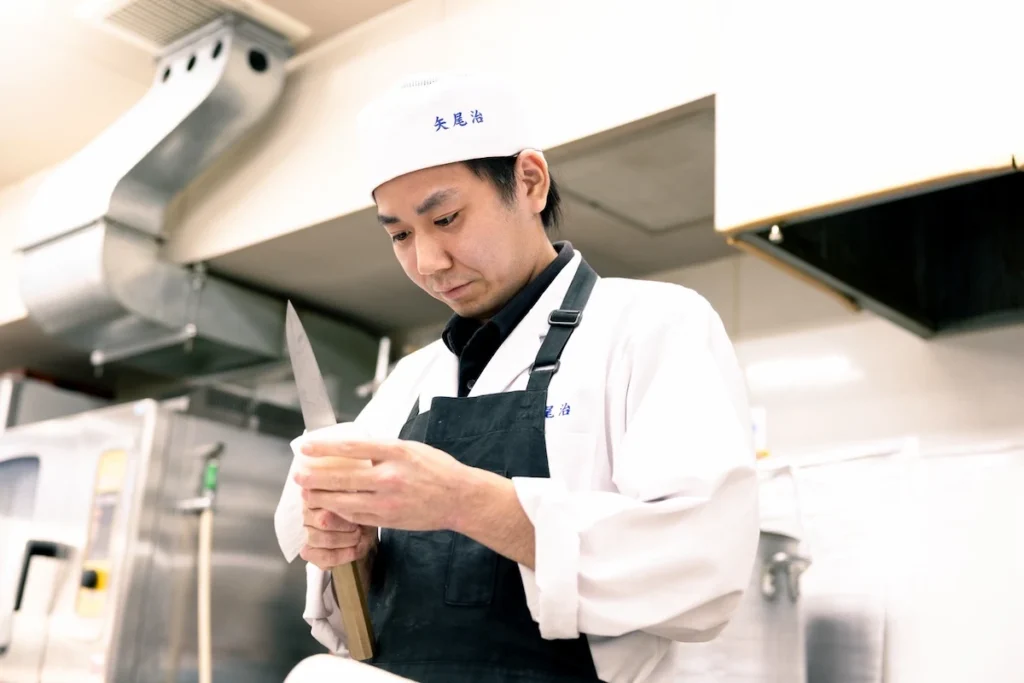
精進料理 矢尾治 五代目料理人
明治元年創業、各宗派御本山御用達(西本願寺、清水寺、泉涌寺、妙法院門跡、東福寺、南禅寺、建仁寺、天龍寺、相国寺 ほか)の仕出し専門精進料理屋「矢尾治」の五代目として、厨房を預かる。

京都・嵐山の料亭での修行を経て家業を継承。精進料理を「仏門の食事規範」であり日本料理の原点と捉え、旬の野菜の旨味を最大限に引き出すだしと火入れに心を配っている。

一方で、「精進京果 レーズンサンド」など植物性素材のみの菓子づくりを通じて、精進料理の伝統を現代のライフスタイルにつなげている。150年以上にわたり寺院の食を支えてきた矢尾治の味と精神を受け継ぎながら、国内外の人々が心身をととのえる一膳としての精進料理を探求し続けている。
Issei Ueda – Profile
Fifth-generation Chef, Shojin Ryori Yaoji
Issei Ueda is the fifth-generation chef at Shojin Ryori Yaoji, a catering house for temple shojin cuisine founded in 1868 and serving the head temples of various Buddhist schools in Kyoto, including Nishi Hongan-ji, Kiyomizu-dera, Sennyu-ji, Myōhōin-monzeki, Tōfuku-ji, Nanzen-ji, Kennin-ji, Tenryu-ji and Shokoku-ji.
After training at a traditional ryotei in Arashiyama, Kyoto, he took over his family’s kitchen. He regards shojin ryori not simply as vegetarian food but as a monastic code of eating and one of the roots of Japanese cuisine, devoting himself to broths and cooking techniques that draw out the natural depth of seasonal vegetables.
At the same time, through plant-based confections such as the “Shojin Kyouka” raisin sandwich, made solely with ingredients of plant origin, he connects the tradition of shojin cuisine with contemporary lifestyles.
Inheriting more than 150 years of Yaoji’s taste and spirit as a purveyor to Kyoto’s temples, Ueda continues to explore shojin cuisine as a meal that gently restores both body and mind for guests from Japan and abroad.
明治元年創業の仕出し専門 精進料理屋「矢尾治」五代目 上田壱盛氏に聞く、受け継がれる味と心
家業を継ぐきっかけ
大学を卒業する頃、両親から「跡を継ぐことについてどう考えているか」と尋ねられました。
特別強い思いがあったわけではありませんが、長く続いてきた仕事でもありますし、「自分もやってみようか」という気持ちで継ぐことにしました。学生時代は包丁も握ったことがなかったので、卒業後は嵐山の料亭で3年間修行し、その後に矢尾治へ戻りました。
矢尾治の歩み
矢尾治は明治元年に創業しました。もともとはお寺に出入りしていた八百屋でしたが、やがて仕出し専門の料理屋としての仕事へと変わっていきました。現在は、西本願寺や清水寺をはじめ、宗派を問わず多くのお寺とお取引をいただいています。
一般的に「仕出し料理」というと、料理を届けるだけの印象を持たれるかもしれません。しかし私たちは、法要の一部を担う存在だと考えています。もし食事の段取りが滞れば、法要そのものにも支障が出る。その責任の重さを常に意識しながら、一つひとつの仕事に向き合っています。
精進料理とは
精進料理は、仏教の戒律に基づいた、肉や魚を使わない料理です。特徴としては次のようなものがあります。
- 不殺生(ふせっしょう):動物や魚介を殺して食べることを避ける
- 五葷(ごくん)を使わない:にんにく・ねぎ・らっきょう・にら・玉ねぎなど、刺激の強い食材を避ける
京料理には、鰹節などの香り豊かな出汁と、野菜の繊細な味わいを調和させて楽しむ文化があります。
それに対し、精進料理では鰹節を使わず昆布出汁を用いるため、香りは控えめになりますが、その分、素材である野菜の持ち味をより深く感じられるよう工夫しています。
食前に唱える「五観文」
矢尾治では、「五観文(ごかんもん)」を箸袋に記しています。これは、禅寺などで食事の前に唱えられる偈文(げもん)で、食を通して感謝と慎みの心を養うための教えです。
一、この食事がここに来るまでの多くの人の苦労に感謝します。
二、自分の行いがそれにふさわしいかを反省します。
三、むさぼりや怒りなどの心を起こさないようにします。
四、この食事は良薬のように、体を養うためにいただきます。
五、この食をいただくのは、悟りの道を歩むためです。
命や自然への感謝、自分を省みる心、慎みを持つ姿勢
そうした心の在り方を思い出させてくれる言葉です。精進料理を召し上がる際は、食事の前に心の中でそっと唱えていただければと思っています。
新たな挑戦 ― 「精進京果(しょうじんきょうか)」
「精進京果」は、矢尾治が立ち上げたお菓子ブランドです。きっかけは、「発送できる形で精進の心を伝えたい」という思いでした。これまでお寺関係のお取引が中心で、一般のお客様に知っていただく機会が少なかったため、より多くの方に手に取ってもらえるスイーツという形を選びました。
現在は、有機栽培のカシューナッツ・レーズン・豆乳で作ったレーズンサンドを販売しています。ビーガンの方々とも親和性が高く、精進の考え方を現代的に広げていく一歩になればと思っています。
これからの展望
少子高齢化の影響もあり、お寺の行事がこれから増えていくとは考えにくいのが現状です。
もちろん、お寺のお仕事はこれからも大切に守り続けていきます。その一方で、お取り寄せなどを通じて一般のお客様との新たな接点を広げ、矢尾治の味と心を、より多くの人へ届けられる形を模索していきたいと考えています。
Passing Down Flavor and Spirit: An Interview with Issei Ueda, Fifth-Generation Owner of Yaoji, a Shojin Cuisine Caterer Founded in the First Year of Meiji (1868)
What led you to take over the family business?
Around the time I was graduating from university, my parents asked me, “How do you feel about taking over the business?”
It wasn’t something I had an especially strong passion for at the time, but it was a craft that had been carried on for generations, and I found myself thinking, “Maybe I should give it a try.”
I had never even held a kitchen knife as a student, so after graduation I trained for three years at a traditional restaurant in Arashiyama. After that, I returned to Yaoji.
The history of Yaoji
Yaoji was founded in the first year of the Meiji era (1868). It originally began as a greengrocer that delivered produce to temples, and over time it evolved into a catering business specializing in prepared meals.
Today, we serve many temples regardless of sect, including Nishi Hongan-ji and Kiyomizu-dera.
When people hear “catering,” they may imagine simply delivering food. But we consider ourselves part of the ceremony itself. If the meal arrangements fall behind, the memorial service can be affected. We face each request with a constant awareness of that responsibility.
What is shojin cuisine?
Shojin cuisine is a form of Buddhist vegetarian cooking based on religious precepts, using no meat or fish. Its key principles include:
• Fusesshō (Non-killing): avoiding taking the lives of animals or seafood for food
• Avoiding the “Five Pungent Vegetables” (gokun): refraining from strongly stimulating ingredients such as garlic, green onion, scallion, rakkyo (pickled shallot), chive, onion, and the like
Kyoto cuisine traditionally celebrates a harmony between fragrant dashi (often made with bonito flakes) and the delicate flavors of vegetables. Shojin cuisine, by contrast, does not use bonito; instead, it relies on kombu kelp dashi. The aroma is more restrained, so we put extra care into drawing out the true character of each vegetable and ingredient.
“Gokanmon,” recited before a meal
At Yaoji, we print the Gokanmon (Five Reflections) on our chopstick sleeves. These are verses traditionally recited before meals at Zen temples, teachings meant to cultivate gratitude and mindfulness through eating.
- We reflect on the many efforts that brought this food to us.
- We reflect on whether we are worthy to receive it through our conduct.
- We guard against greed, anger, and other harmful states of mind.
- We take this food as good medicine, to nourish the body.
- We receive this meal in order to walk the path toward awakening.
They remind us of gratitude for life and nature, the practice of self-reflection, and a humble, mindful attitude. When enjoying shojin cuisine, we hope you will quietly recite these reflections in your heart before you begin.
A new challenge: “Shojin Kyōka”
Shojin Kyōka is a confectionery brand launched by Yaoji. It began with a desire to “share the spirit of shojin in a form that can be shipped.”
Until now, our work has mainly been with temples, and there were few opportunities for the general public to discover us. So we chose sweets—something more people can easily pick up and enjoy.
Currently, we sell raisin sandwiches made from organically grown cashews, raisins, and soy milk. They pair well with vegan lifestyles too, and we hope they can become a step toward sharing shojin values in a modern way.
Looking ahead
With Japan’s declining birthrate and aging population, it is difficult to imagine temple events increasing in the years to come.
Of course, we will continue to protect and cherish our work with temples. At the same time, we want to create new points of connection with the general public—through mail-order and other channels—so that we can bring the taste and spirit of Yaoji to more people.