

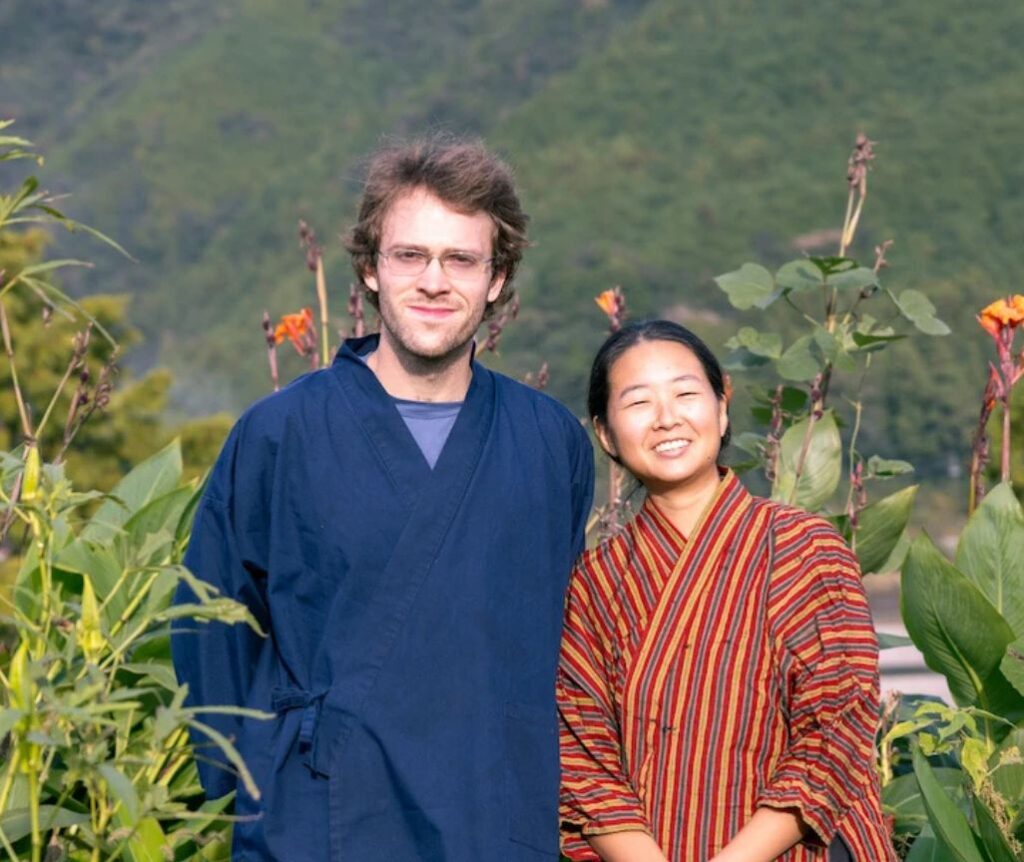
Natsumi Chatsumi 主宰 / 音無茶 生産者

熊野本宮大社を見渡す山の頂。祖父母が約70年前に開いた茶畑を受け継ぎ、「Natsumi Chatsumi」としてよみがえらせた。
本宮町で唯一残るその茶畑を守りながら、熊野本宮大社へ奉納される伝統の茶「音無茶」の継承と生産に携わる。

本宮町に生まれたお茶農家として、この地に流れる時間に寄り添いながら、この土地ならではの釜炒り茶文化を未来へと手渡していく。
その一杯の背景にある熊野釜炒り茶の物語を次世代へつなぐため、自然と共に呼吸するように茶づくりと向き合い、その営み全体を通じて地域文化と精神性を静かに紡いでいる。

一煎の茶に込められた静寂と祈りが、熊野の山々に宿る“再生”の息吹をそっと映し出す。
Natsumi Kuratani (Natsumi Chatsumi)
Founder, Natsumi Chatsumi / Producer of Otonashi-cha
On a mountain ridge overlooking Kumano Hongu Taisha, Natsumi has inherited the tea fields her grandparents carved out some seventy years ago and revived them under the name “Natsumi Chatsumi.”
While safeguarding the last remaining tea fields in Hongu-cho, she carries on the lineage of Otonashi-cha, a traditional tea offered to Kumano Hongu Taisha.
As a tea farmer born in Hongu-cho, she moves in step with the quiet flow of time in this land, dedicating herself to carrying the region’s unique culture of pan-fired tea into the future.
To pass on the story behind Kumano’s pan-fired tea to the next generation, she approaches tea-making as if breathing together with the surrounding nature, and through the entirety of this work, quietly weaves the region’s culture and spirituality.
In each cup, the stillness and prayer infused into the leaves gently evoke the breath of renewal that dwells in the mountains of Kumano.
茶農家
倉谷夏美氏に聞く、お茶を作り続けるということ
人生の転換点
私はもともと管理栄養士の勉強をしていて、学生時代は4年間大阪にいました。その頃、ひょんなことからハワイにホームステイする機会があって、そこで出会ったご夫婦にすごく気に入ってもらえたんです。
その方たちはいろいろなビジネスをされていて、「技術や思いを継承してもらいたいから、弟子にならないか」と声をかけてくださいました。そんなチャンスは滅多にないと思って、卒業したらハワイに行こうと心に決めていました。
専門学校4年生のときに、茶畑をやっていたおじいちゃんが亡くなりました。茶畑は売りに出される話になっていて、実際に売りにも出されていました。
でも、おじいちゃんがゼロから開拓して、茶の木を植えて作り上げたあの景色を、手放してしまうのはもったいない、残念だなと思ったんです。その思いをSNSに投稿したら、ハワイの方から「なっちゃんがやればいいじゃん」と背中を押されました。もしおじいちゃんが元気で、ハワイに行く話もなかったら、私は今ごろ管理栄養士としてどこかで働いていたかもしれません。ハワイと茶畑が売りに出されたことが、人生が変わるきっかけとなりました。
未経験からの茶づくり
私は都会よりも、田舎や自然が豊かな場所で暮らしたい気持ちが強かったので、田舎暮らしや茶畑での作業に抵抗はありませんでした。おじいちゃんとおばあちゃんの家で暮らし、茶畑を守ることに関われているのは、ありがたいなと思っています。ただ、始めるのは簡単でも、続けることが一番難しいと日々感じています。
技術を学ぶということ
最初はおばあちゃんに教えてもらったり、隣の農家さんの作業を見よう見まねで覚えたりしました。
一番大きかったのは、和歌山で川添茶を作っていて日本手もみ製茶技術資格の最高位「茶匠」の称号を持っている方に出会えたことです。その方から、お茶の栽培や加工、煎茶の手もみ技術の基礎を教えていただきました。師匠のところまでは、車で片道1時間半かけて通っていましたし、他県の農家さんのところへ見学に行くこともありました。
先日、私も日本手もみ製茶技術資格「教師補」を取得しました。
毎年が「初めて」お茶づくりを始めて5年ほど経ちましたが、正直、まだまだだと感じています。
一通りの作業は大枠で覚えましたが、年によって気温も天候もまったく違います。やってみないと分からないことばかりで、毎年「ああ、初めてだ」と思う発見があります。
今も、自分の理想のお茶の味にはたどり着いていません。肥料のやり方や、紅茶の発酵時間、温度など、もっとこうしたいという思いがあって、日々研究、改良を重ねています。
自社ブランド「なっ茶」へ
おじいちゃんの代までは卸売が中心でしたが、自分たちでパッケージングして売れば、自分たちで値段を決めることができますし、利益率も良くなります。そう考えて、2020年に自社ブランド「なっ茶」を立ち上げました。
以前は春の一番茶しか使っていませんでしたが、今はその後の芽でほうじ茶を作ったり夏のお茶で紅茶を作ったりしています。
現在は、釜炒り茶、煎茶、紅茶の3種類を作っています。本宮でこれらを作っている農家は、ほぼうちだけだと思います。
お茶農家が営む宿
宿泊される方の9割以上は、熊野古道を歩きに来られた海外の方です。
興味のある方に向けてオプションとして、お茶の飲み比べや茶畑見学などの体験プログラムもおこなっています。
和歌山にお茶があることは、日本人でも、さらに言えば和歌山県民でも知らない人が多いです。だから、熊野古道を歩いたときに、「ここにお茶があるんだ」という記憶を、飲む体験と一緒に残してほしいと思っています。
「お茶農家の視点で料理を作る」ということを意識して、お茶を使った料理や、地元の食材を提供しています。
宿泊された方々の満足度は概ね高いと感じています。
ただ、お茶の作業がある時期は宿を続けられないので、4月中旬から7月までは宿を休んでいます。
今後はそこも改善していければと思っています。
これからの目標
お茶に関しては、日本茶アワードや国産紅茶グランプリなど、全国的なコンテストで賞を取れるレベルまで上げたいと思っています。今は私とパートナーの2人でやっていますが、将来的にはメンバーを増やして、グループとして農業をやっていきたいです。
そうすれば、和歌山や本宮全体で音無茶を応援しようという流れが作れるはずです。
今はそのための基礎作りだと思っています。これからももっと多くの人に、お茶の魅力を届けていきたいです。
Tea Farmer
Continuing to Grow Tea — An Interview with Ms. Natsumi Kuratani
A Turning Point in Life
I originally studied to become a registered dietitian, and during my student years I spent four years in Osaka. Around that time, by chance, I had an opportunity to do a homestay in Hawaii. I really connected with the couple I met there, and they grew very fond of me.
They were involved in various businesses, and they even said, “We want to pass on our skills and values—would you like to become our apprentice?” I felt chances like that were rare, so I decided that after graduation, I would go to Hawaii.
Then, in my fourth year of vocational school, my grandfather—who had been tending tea fields—passed away. The tea fields were going to be put up for sale, and in fact they were listed.
But my grandfather had developed that land from nothing, planted the tea bushes, and created that landscape with his own hands. I felt it would be such a shame to let it go.
When I posted those feelings on social media, someone in Hawaii encouraged me by saying, “Then you should do it, Nacchan.” That pushed me forward.
If my grandfather had still been well, and if there hadn’t been any plan to go to Hawaii, I might be working somewhere now as a registered dietitian. Hawaii—and the tea fields being put up for sale—became the catalyst that changed my life.
Making Tea with No Prior Experience
More than city life, I had always wanted to live in the countryside, somewhere rich in nature. So I didn’t feel resistance toward rural life or the work in tea fields.
Living at my grandparents’ home and being involved in protecting the tea fields feels like a blessing. Still, I’ve learned that even if starting is easy, continuing is the hardest part—and I feel that every day.
Learning the Craft
At first, my grandmother taught me, and I learned by watching nearby farmers and imitating their work.
The biggest turning point was meeting someone in Wakayama who produces Kawazoe Tea and holds the highest rank in the Japan Hand-Rolled Tea Technique Certification—the title of “Tea Master (Chasho).” From him, I learned the fundamentals of tea cultivation and processing, as well as the basics of hand-rolling sencha.
I drove an hour and a half each way to study with my mentor, and I also visited farmers in other prefectures to learn from them.
Recently, I obtained the Japan Hand-Rolled Tea Technique Certification, “Assistant Instructor (Kyoshi-ho).”
Every Year Feels Like “The First Time”
It’s been about five years since I started making tea, but honestly, I still feel I have a long way to go. I’ve learned the overall flow of the work, but temperatures and weather are completely different every year.
There’s so much you can only understand by doing, and every year I have discoveries that make me think, “Ah—this is my first time.”
Even now, I haven’t reached the flavor of tea that I’m aiming for. Fertilizer methods, fermentation time and temperature for black tea—there are many things I want to refine. I keep researching and improving day by day.
Building Our Own Brand: “Naccha”
Up through my grandfather’s generation, our business was mainly wholesale. But if we package and sell our tea ourselves, we can set our own prices and improve profit margins. With that in mind, I launched our in-house brand, “Naccha,” in 2020.
In the past, we used only the first spring harvest. Now, we also make hojicha from the later shoots, and black tea using summer tea.
Currently, we produce three types: pan-fired tea, sencha, and black tea. In Hongu, I believe we’re almost the only tea farm making these varieties.
A Guesthouse Run by Tea Farmers
More than 90% of our guests are overseas visitors who come to walk the Kumano Kodo.
For those who are interested, we also offer optional programs such as tea tastings and visits to the tea fields.
Many people—even Japanese, and even residents of Wakayama—don’t realize that tea is grown here. That’s why I want people, when they walk the Kumano Kodo, to take home the memory that “there is tea here,” together with the experience of drinking it.
With the idea of “cooking from a tea farmer’s perspective,” we serve dishes that incorporate tea and use local ingredients.
Overall, we feel our guests’ satisfaction is high. However, during the busiest tea-working seasons we can’t keep the guesthouse running, so we close from mid-April through July. I hope to improve that going forward.
Goals for the Future
As for the tea itself, I want to raise our quality to a level where we can win awards in national competitions such as the Japan Tea Awards and the Japanese Black Tea Grand Prix.
Right now it’s just me and my partner, but in the future I’d like to expand our team and develop farming as a group. If we can do that, we should be able to create momentum across Wakayama and Hongu to support Otonashi Tea.
I think we’re laying the groundwork for that now. From here on, I want to share the charm of tea with even more people.